
The Devil in Disguise
How the Epstein Files Exposes the Truth of Our Supernatural Reality


How you are fallen from heaven, O Lucifer, son of the morning! How you are cut down to the ground, you who weakened the nations! For you have said in your heart: ‘I will ascend into heaven, I will exalt my throne above the stars of God; I will also sit on the mount of the congregation on the farthest sides of the north; I will ascend above the heights of the clouds, I will be like the Most High.’ Yet you shall be brought down to Sheol, to the lowest depths of the Pit. Those who see you will gaze at you, and consider you, saying: ‘Is this the man who made the earth tremble, who shook kingdoms, who made the world as a wilderness and destroyed its cities, who did not open the house of his prisoners?’ All the kings of the nations, all of them, sleep in glory, everyone in his own house; but you are cast out of your grave like an abominable branch, like the garment of those who are slain, thrust through with a sword, who go down to the stones of the pit, like a corpse trodden underfoot. You will not be joined with them in burial because you have destroyed your land and slain your people. The brood of evildoers shall never be named. Prepare slaughter for his children because of the iniquity of their fathers, lest they rise up and possess the land, and fill the face of the world with cities. (Isaiah 14:12-21 NKJV)
Many have portrayed the Devil. Al Pacino famously depicted him in The Devil’s Advocate (1997) with an unforgettable rant comparing God to an “absentee landlord.” Robert De Niro provided his own spin in the infamous noir Angel Heart (1987). Elizabeth Hurley’s femme fatale version upped the sex appeal in Bedazzled (2000), and Rosalinda Celentano lent an eerie, androgynous portrayal in The Passion of the Christ (2004). Personally, my favorite is Viggo Mortensen’s take in the lesser-known ‘90s crime drama The Prophecy (1995), where Mortensen emits a terrifying, almost blase disregard for humankind: “God? God is love. I don’t love you.”
It’s a moment of tense, naked terror. The protagonist, Katherine (Virginia Madsen), comes face-to-face with the beautiful but frightening face of evil, who threatens to “lay you out and fill your mouth with your mother’s feces.” Perched atop a pile of stones, he roars at a lesser demon to back off, and boasts about being the “first angel, loved once above all others.” As he discusses the looming cosmic war between demons and angels, he nonchalantly picks apart a rose and eats it, while referring to humans as “talking monkeys” with bored disdain. There are no attempts at charm or seduction here; just a cold antipathy towards human beings which reeks of pride and contempt. The scene is less than five minutes, and yet it remains the most unforgettable in an otherwise forgettable film.

(Pictured above: the incredibly talented Viggo Mortensen as Lucifer in Gregory Widen’s The Prophecy (1995)).
In the cold, early days of 2026, it is a horrifyingly apropos scene. For the human characters in The Prophecy and other similarly themed movies, the discovery that the Devil actually exists provokes an existential shock. According to the true religion of the post-Enlightenment West, the Devil does not exist. He can’t. He is merely a metaphor, a symbolic archetype that represents the worst of human nature. Devils and demons are not real entities. That belief belongs to the archaic, primitive minds of superstitious human beings unfortunate enough to live before the Scientific Revolution. But we are advanced, rational souls who have successfully untethered ourselves from the oppression of ‘magic’ and ‘superstition.’ We believe in reason, inquiry, and science. We believe in scientific materialism.
Or so we thought.
After the U.S. Department of Justice unveiled the latest dump of documents from the ‘Epstein Files,’ Americans are facing not just an inconvenient truth, but a sickening one. The corruption, so many of us suspected, which has rotted away the American government at almost every echelon, appears worse than imagined. The system we all live and operate under is more than fraudulent. Among the grotesque admissions and discussions revealed in the files1, there is a shockingly large number of conversations around the sexualization of young children, torture, human trafficking, and “rituals.” Ten years after Julian Assange and WikiLeaks leaked the John Podesta emails, the “debunked” Pizzagate conspiracy theory2 looks awfully relevant, as we see hundreds of mentions once again between grown adults of “pizza,” “hot dogs,” “grape soda,” and “jerky.”
(Below are all real emails from the most recently updated files.)

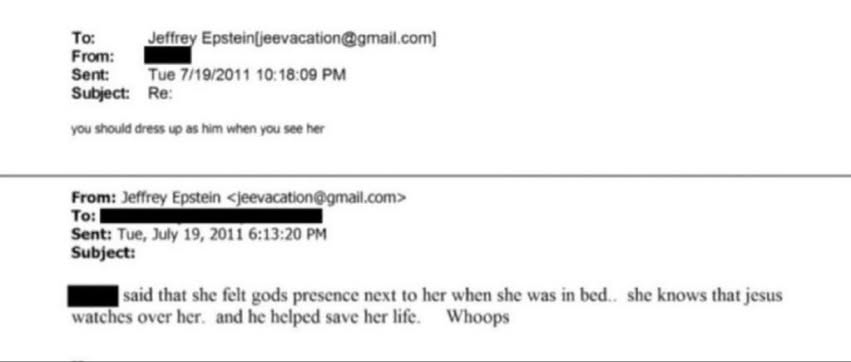

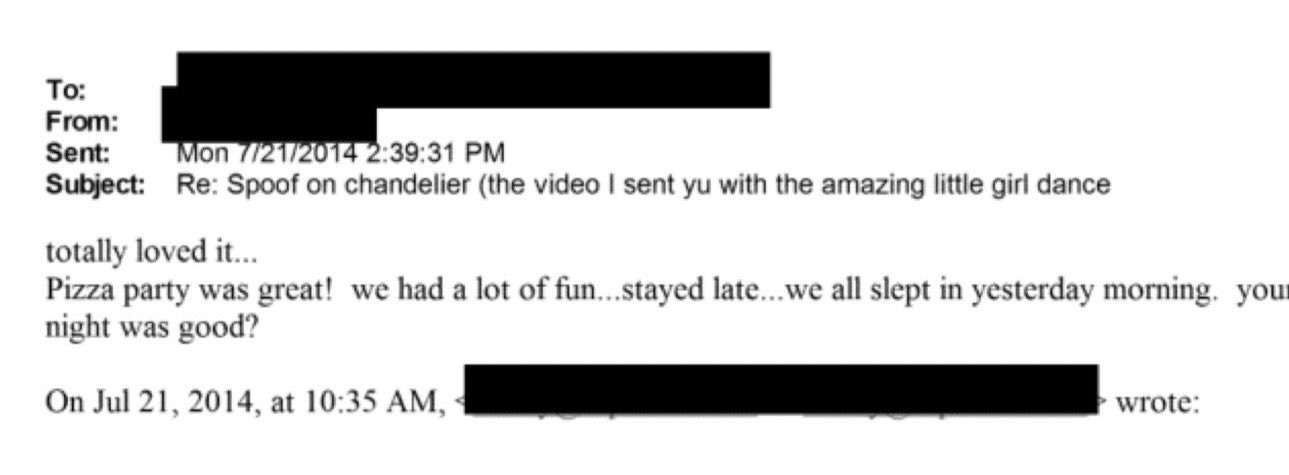
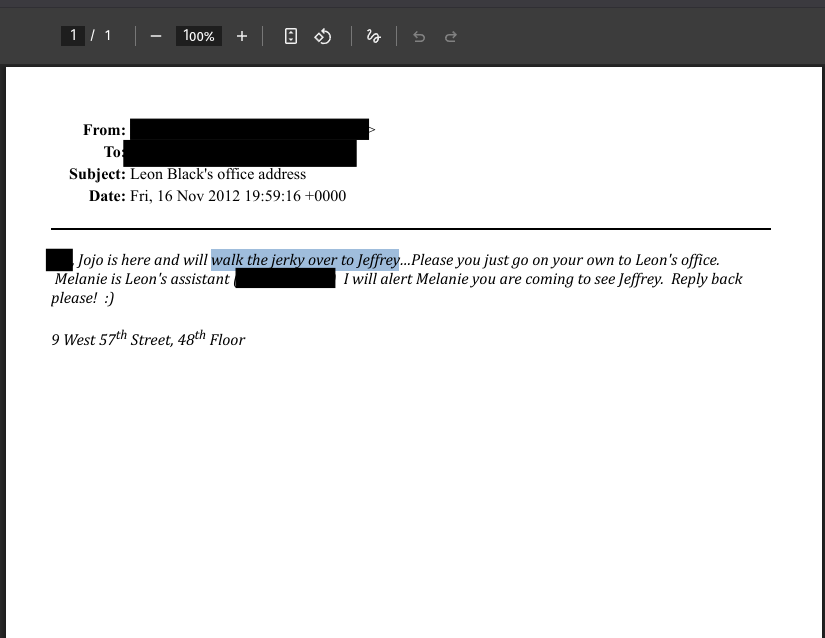


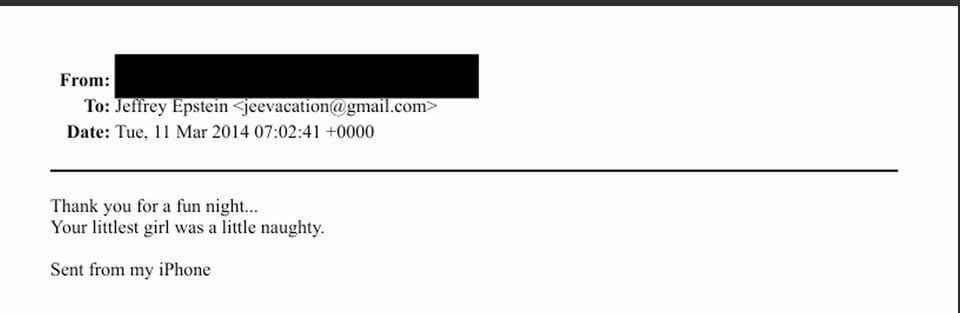


Naturally, these conversations have sparked a cascade of questions and theories. Are the elites simply engaging in “patriarchal violence” against women, children, and underprivileged people (as some have argued), or are there more sinister explanations? Is this systemic corruption merely the result of unfettered capitalism or of technologically enabled imperialism? Or, what if the elites are participating in demonic rituals and worship? What if it’s all of the above? If so, what does that mean about the Modern West, and more broadly, reality itself?
Although there are still some journalists and pundits who refuse to entertain “conspiracy theories” and consider these discussions part of a “moral panic” akin to the Salem witch trials, students of occultism, cults, and mystery religions recognize some familiar figures and features. Cannibalism, pedophilia, infanticide, human sacrifice, and ritual sex or prostitution are neither newfangled forms of debauchery nor mere elements of the antiquated past. Instead, they are common and celebrated practices of powerful, wealthy, and militaristic empires that accumulate resources through war and slavery, and who worship bloodthirsty, vengeful, and sexually dominant deities. These deities have often gone by different names - Baal, Zeus, Jupiter, Hadad, Set - but Holy Scripture and Second Temple literature identify them chiefly as one entity, the Prince of Demons. In other words, the Devil.
But who is this mysterious figure from religion, legend, and folklore, and how can we recognize him in these disturbing emails? To answer this question, we must turn to history, Scripture, and the rich repositories of Second Temple Judaism and the early Church.
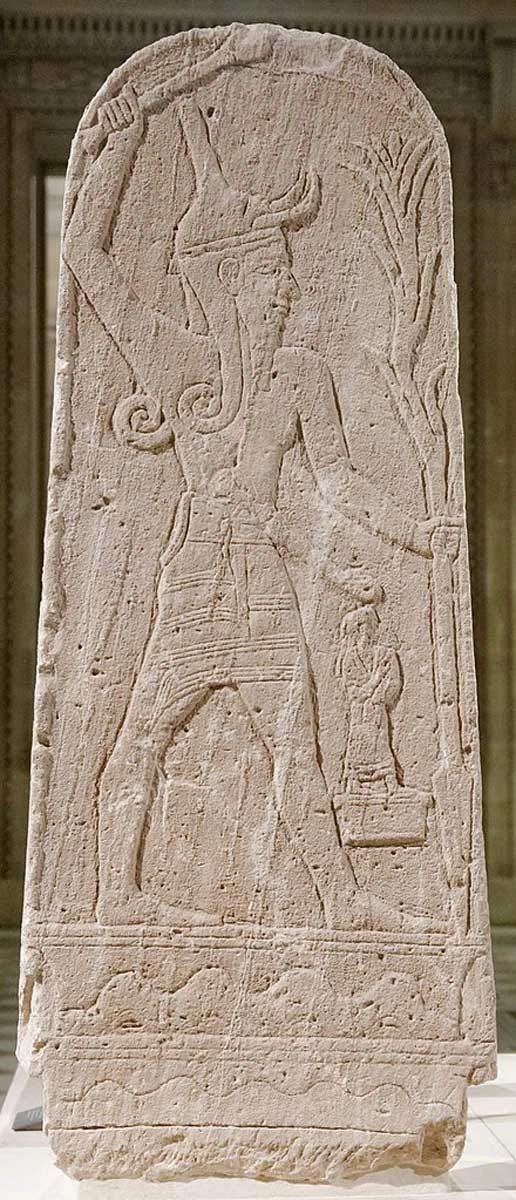
(Pictured above: Baal with a thunderbolt, circa 15th century BC.)
“He complained in no way of the evil reputation under which he lived, indeed, all over the world, and he assured me that he himself was of all living beings the most interested in the destruction of Superstition, and he avowed to me that he had been afraid, relatively as to his proper power, once only, and that was on the day when he had heard a preacher, more subtle than the rest of the human herd, cry in his pulpit: “My dear brethren, do not ever forget, when your hear the progress of lights praised, that the loveliest trick of the Devil is to persuade you that they don’t exist!” - “Le Joueur Généreux” by Charles Baudelaire (1864), translated from French by Arthur Symons (1918)
In his recent study of the enigmatic figure3, Father Stephen De Young dispels the formerly accepted academic notion that the “Devil” originated in ancient Persian mythology. Instead, Fr. De Young argues, based on archaeological and textual analysis, that the earliest identification of the Devil stems from the Ancient Near East, specifically the Canaanite/Phoenician deity Baal. This is most evident in the Ugaritic corpus of liturgical and religious texts (found on six tablets) known as the Baal Cycle. Similar to heroic epics found across the ancient world, the Baal Cycle focuses on how the storm god successfully rebelled and overthrew his father, El, the god most high. Although the word Baal is Aramaic for “lord” or “master,” the tablets clearly also refer to a specific deity, who became the hero of this epic.
The theme of these texts is Baal’s victory over his father and the rest of creation. In a story which will sound familiar to lovers of Greek and Roman mythology:
The broad arc is one of Baal, seizing dominion over the entirety of the cosmos. As a storm god, he already controls the skies. Through warfare, he comes to be the master of the sea and then the underworld. While Zeus, Poseidon, and Hades are brothers who collectively rule existence among the Olympians, in the Baal Cycle, Yam and Mot… are enemies Baal must overcome as he enlarges his kingdom. Baal is marked by ambition - a desire to overthrow his rivals, including his own father, and seize power… [El] doesn’t directly confront his son because he is afraid of him. He caves in to the demands to build Baal a palace because Anath [Baal’s sister and consort] threatens to cave in her father’s head. By the end of the Cycle, El is still around but seems mostly to be a sycophant, praising his son for all his great accomplishments… Further, the sexual relationship beween Baal and his mother, El’s consort, must be read against the background of family usurpation in the ancient Near East. Sexual conquest was a means of humiliating a father and taking control of a family from him, as in the biblical cases of Ham, Reuben, and Absalom. In this case, the family is the council of the gods, the seventy sons of El. The Baal Cycle is the story of a revolution… of a divine son overthrowing his divine father… commonplace of ancient myth. Whoever was the most high god at a particular time was not the original but the one who had overthrown his father and seized the throne. (9-10)
The texts and subsequent worship depict this political and cosmic usurpation as a net positive, not just for the cosmos but for humanity writ large. As a storm god, Baal oversees rain, and thus, agriculture, the human cultivation of crops and animal domestication. After his defeat of Yam and Nahar (“sea” and “river”), he is seen as a master over primordial chaos. Yet he is also a fertility god, responsible for the proliferation of abundant life. Therefore, Baal’s victory “represents a triumph of human life over a hostile world that all too often seems aimed at humanity’s destruction… He is a god of humans and human civilization, a god of the city of humankind.” (15) This association with civilization naturally translated into an association with the city, the epoch of human technology and civilization in the ancient world. As Fr. De Young points out, cities in the ancient world were built around temples and shrines, particularly those dedicated to the deity believed to bless the city. Thus:
Baal was seen as the true king of the city. The human king was his prince, his regent; this role was part of the human king’s claim of divinity. The human king was the point of access to the divine for the people of the city. Baal’s central shine, generally at the highest point of the city, was the place from which Baal exercised his rule, and his human subjects brought their offerings and addressed their requests to him there. (16)
For his subjects, worship became the means through which they could participate in Baal’s victories. Fr. De Young correctly remarks that for most of human history, religion was not merely a matter of belief, but rather a form of ritual participation. The reenactment of Baal’s battles and victories allowed his followers to connect with him on a communal and visceral level where “worship does make one like the object of worship.” (25) This manifested in a variety of rituals, some of which may seem familiar: annual festivals, animal sacrifices, ritual sex (sometimes in the form of orgies), and occassionally, human sacrifice.

(Pictured above: The Pyramid of Bomarzo or “Sasso del Predicatore” in Viterbo, Italy. Many scholars believe that it was a sacrificial altar after the discovery of infant bones, which show evidence of ritualistic cuts and marks.)
As scholars of history and religion know, human sacrifice was not just a feature of Canaanite or Phoenician religion. The Spaniards famously encountered human sacrifice among the Aztecs during their colonization of Mesoamerica, while archaeology has uncovered evidence of human sacrifice among the Etruscans (ancient predecessors of the Romans), the Celts, the Carthaginians (inheritors of Phoenician culture), the ancient Chinese, the Hawaiians, the Incas, and the Egyptians. Within the Baal cult, “most human sacrifice… was an act in extremis. One or more humans would be sacrificed in some dire circumstance… Before this, priests of Baal would engage in acts of self-harm, self-mutilation, and scarification.” (32) The exception to this rule was infant sacrifice. Here we see where the concept of “Molech” might have originated:
Children were sacrificed to Molech, a deity whose name essentially means ‘ruler.’ The infants were offered by burnings as whole offerings. During these offerings, music would be played loudly to mask the sounds. Parents receieved clay masks to hide any expressions of pain from the deity being summoned. One of the primary reasons that devotees would bring offerings of infants to Baal was to guarantee the fertility of their wives… a perverse kind of firstfruits offering - not of crops, but of children. By offering the firstborn child back to Baal, parents thought their sacrifice would guarantee that he would bless them with more… While the Molech cult appears originally to have been a reality at rural shrines ancillary to Baal worship, the Molech cult in the Phoenician context was ultimately mainstreamed into the Baal cult. (32-33)
This type of syncretism4 was extremely common in the ancient world, to the point that the Baal cult was subsumed into the Greek Zeus and Roman Jupiter cults. As cultures migrated and encountered one another through trade or war, more rural communities often identified their local deities with those of the larger, sometimes invading peoples. As we shall see, the Baal Cycle fitted quite nicely with Greek and Roman religious narratives, particularly after the massive expansion of the Roman Empire.
Ritual sexuality and prostitution also played a role in Baal worship, in ways which varied from the familiar to the most offensive. Shrines were often the most prominent locus for ritual sex, which relied on prostitution. Yet these prostitutes were rarely willing ‘employees’ and more often slaves, often captured or sold during childhood. They were expected to have sex predominantly in three ways: with priests on feast days, with men seeking a blessing, and in group or orgy settings during festivals. (36)
Shockingly, ritual sex also involved bestiality, particularly with bulls. Bulls were an essential animal for agricultural societies because they “represented power, virility, domination, and order.” (38) In other words, the bull symbolized the agricultural revolution. Thus, the bull became closely associated with Baal, and by having sex with bulls, prostitutes honored the god and ensured fertility. As Fr. De Young notes, this practice may explain the explicit prohibitions against bestiality in the Levitical laws as well as “God’s command of the destruction of a great deal of Canaanite livestock during the conquest of Joshua.” (39) In fact, much of the stranger laws in the Torah make sense when compared to the very real and very taboo religious practices of the Israelites’ neighbors.
The Book of Joshua is not the only place in Holy Scripture where we see possible mention of Baal. The Old Testament is full of explicit references to the Canaanite deity across the historical books, psalms, and prophets. In the Book of Numbers, we see the Hebrews’ first interactions with Baal at Peor among the Moabites. Through Balaam, the Hebrews end up engaging in ritual prostitution and worship of Baal, one of just many examples where God’s people end up participating in idolatry. For this violation, God stridently punishes the Hebrews. But to Fr. De Young’s point, this is not simply because God (“Yahweh”) is jealous and vengeful. It is because the repercussions of such worship involve real and damaging ramifications:
By joining themselves in worship to Baal at Peor, through sacrificial and sexual ritual, the Israelites bring about dire consequences for the entire community. Immediately after the sin of the people, led by elders of clans in various Israelite tribes, Moses receives the command that those who have participated must be cut off from the community - either exiled or put to death. Because of their participation in these rituals, a plague strikes the Israelite camp. By the time the plague is lifted, it had killed twenty-four thousand people. The fierceness and destruction of the plague are directly tied to the fact that the Israelite leadership did not cut off the participants from the community as God had commanded. (62)
While this consequence may seem harsh by modern standards, it reflects the ancient worldview that worship and ritual were communal forms of bonding, not merely matters of individual conscience. Worship shaped the entire community. If members, especially their leaders, participated in murderous or sexually taboo rituals, the effects were felt across the board. Hence, cultures are molded by the forces they worship. One could argue that it is still very much the case today in 2026’s America.
Baal worship also clearly shows up in 1 and 2 Kings (or 3 and 4 Kingdoms in the Septuagint) during the reign of Jeroboam. After Israel splits into the Northern and Southern Kingdoms, the Northern Kingdom, under Omri, abandons worship of Yahweh and adopts Baal worship. This becomes official after Omri’s son, Ahab, marries the Phoenician princess Jezebel, whose name literally means “Where is Baal?” (76). Ahab and Jezebel enforce the worship of Baal and persecute those who still worship Yahweh, until the Prophet Elijah directly challenges the deity. Yahweh withholds rain from the land for three years, undermining the storm god, and when hundreds of Baal’s prophets try to summon him for lightning for a bull’s sacrifice, nothing occurs. But when Elijah prays to Yahweh, the God of Israel, displays his power by destroying the entire altar. Elijah then kills Baal’s prophets.
Again, Elijah’s actions might seem extreme to the modern Westerner, but the prophet’s reaction makes sense when one considers the context of Baal. For readers of Scripture, especially the Apostles and Second Temple Jews, Baal seemed very familiar. His victory narrative echoed those in Ezekiel and Isaiah. In Ezekiel, the prophet addresses the human king (“prince”) and the true “king” of Tyre, the center of the Phoenician Empire. The true king “is said to have been present in Eden and carved of gold and precious stones like an angelic being. He is said to have been a guardian cherub. He is said to have walked on the mountain of God.”5 (85) For his pride and violence, Yahweh ejects him from the heavenly council and turns him “to ashes upon the earth.”6
Isaiah makes an almost identical proclamation against the chief deity of the Neo-Babylonian Empire, Bel. Like the later syncretism of Baal with Zeus under the Greeks, the Babylonians subsumed Baal into their god, Bel, and eventually Bel’s rebellious son, Marduk. (86) Like the “king” of Tyre, this divine being’s:
descent began from the heights, not from earth, as it would for a human king. This figure is compared to the morning star, one of the three great lights, along with the sun and the moon. In translating this verse into Latin, St. Jerome coined the name Lucifer, which became a traditional name for the Devil. The text of Isaiah, however, identifies this figure quite clearly as Baal. In his pride, he tried to make himself the Most High, meaning that he wanted to sit on the mount of assembly, the mountain of the gods, and preside in the far reaches of the north. This was, of course, the exact plan of Baal in the Baal Cycle… [Yet] Isaiah makes clear that this rebellion was a failure that resulted in Baal being confined to Sheol [the Underworld]. While he was able to cause great chaos aand destruction in the world of men and among the nations whom he deceived into following and worshiping him, his final fate would be even worse than theirs. (86)7
But is this figure the same “evil one” described in the New Testament Scriptures? Fr. De Young argues quite convincingly so. Though the Gospel writers and St. Paul use different names for him, some of his names derive directly from Baal epithets. For instance, Beelzebub or Beelzebul, which “is a Greek transliteration of an Aramaic title for Baal that means roughly ‘Baal is lord’ or ‘the great lord Baal.’ [In parody] Beelzebub means, literally, ‘lord of the flies.’”8 (93-94) When the Pharisees accuse Christ of being Beelzebub, they are attempting to associate him not just with a single demon but with “the prince of demons.” (94)
For Jews in the Second Temple Period, there was a clear theological and spiritual explanation for the origin of this “prince of demons,” found in some of the chief apocryphal texts, the Books of Enoch and Jubilees. These texts not only outline some of the more esoteric and bemusing verses within Genesis regarding the Flood, but also describe:
The first rebel [who] is identified as Azazel, the author of sin and evil associated with the Day of Atonement ritual (Lev. 16). Azazel leads a group of angelic beings in rebellion against God. That rebellion produces a group of mortal ‘sons’ of these demonic powers through engaging in rituals that involve human sacrifice, cannibalism, and sexual immorality. Azazel’s co-rebels are imprisoned in the deepest parts of the underworld. Their children, designated Nephilim, or ‘giants,’ are destroyed in the Flood in the days of Noah. The spirits of some of the Nephilim still wander the earth as demonic spirits. (94-95)
The “unclean” spirits Christ encounters and exorcises in the Gospels recognize His authority because they are these original “sons” of demons.
For Jews within the Second Temple Period, this “prince of demons” had reinvented himself throughout human history. He would attain power through worship as a variety of “deities,” but would reveal himself again and again through the nature of his demands. He would consistently promise (and deliver for a time) knowledge, power, military supremacy, and technology, but would require sacrifices that violated human dignity: bestiality, infant sacrifice, animal strangulation, pedophilia, orgies, prostitution, and cannibalism. Thus, he would seduce human beings into becoming more like him; abominations of God’s natural and divine order. He would pose as their “father” but eventually reveal himself as a counterfeit.
Under the Greek Seleucids, pious Jews recognized this “prince” in the figure of Zeus. During the expansion of his empire, “Alexander the Great had begun the process of reassimilating Zeus and Baal four centuries earlier… [since Greeks] regarded Zeus as the highest god, the father of all gods and men… the first Panhellenic god [who] served as a culturally unifying force.” (96-97) When Antiochus IV Epiphanes wanted to punish the Jews for refusing to worship Zeus in 167 BC, he sparked the eventual Maccabean Revolt by “offering pigs as sacrifices on the altars9” (97) of the Jewish temples in Jerusalem and Mount Gerizim. For the Maccabees, this was not only a direct mockery of the Torah but also a familiar sign of rebellion against God.
This became even clearer under the Roman Empire, which would eventually rule the known world. Like previous cultures, the Romans adopted the Hellenic pantheon and merged it with their own, simply using Latin names instead of the traditional Greek ones. In the Jewish mind:
The Roman Jupiter was known to be a more Western adaptation… The name is likely derived from the Greek Iopater, regarded as the father of all (Greek) people. The name of Noah’s son Japeth is an incorporation of this name into the Book of Genesis, where he is presented as the father of the peoples of Asia Minor and Greece. Worship of an ancestral father and king merged with storm-god traditions, received from Syria and Indo-European sky-god traditions, to produce the figure of Jupiter, who also rebelled against his father [Saturn or Chronos] and ascended to become king of the gods. Jupiter was clearly Zeus, and Zeus was, both to Jewish people of the first century and the other residents of Judea and neighboring provinces, clearly Baal. Through the Roman Empire, he had come to exert a malign power of the world, and most of the peoples worshiped him rather than the true God. (98)
This “malign” influence can be seen not only in the historical record but also in the prohibitions of the Early Church, which opposed the imperial Roman cult by establishing strict moral boundaries around practice and behavior. This is evident not just in the Pauline Epistles but in the Didache, which explicitly states: “You shall not kill; you shall not commit adultery; you shall not corrupt youth; you shall not commit fornication [sexual sin]… you shall not kill a child by abortion, neither shall you slay it when born.”10 As Fr. De Young aptly notes in Apocrypha: An Introduction to Extra-Biblical Literature, “It was socially acceptable for adult men to use children - especially enslaved children - below ten years of age for this purpose. Rome had inherited the term pederast, which literally means ‘lover of children,’ from the Greeks.” (281) But instead of using the term “pederasty,” the Didache uses the more accurate phrase pedophthoreseis (παιδοφθορήσεις), “corrupter of children.” While the Roman Empire had allowed and, in some ways, sanctified the murder, abortion, trafficking, and rape of children, Christ’s Church would distinguish itself by correctly forbidding these actions and calling them out for what they were: abominations.
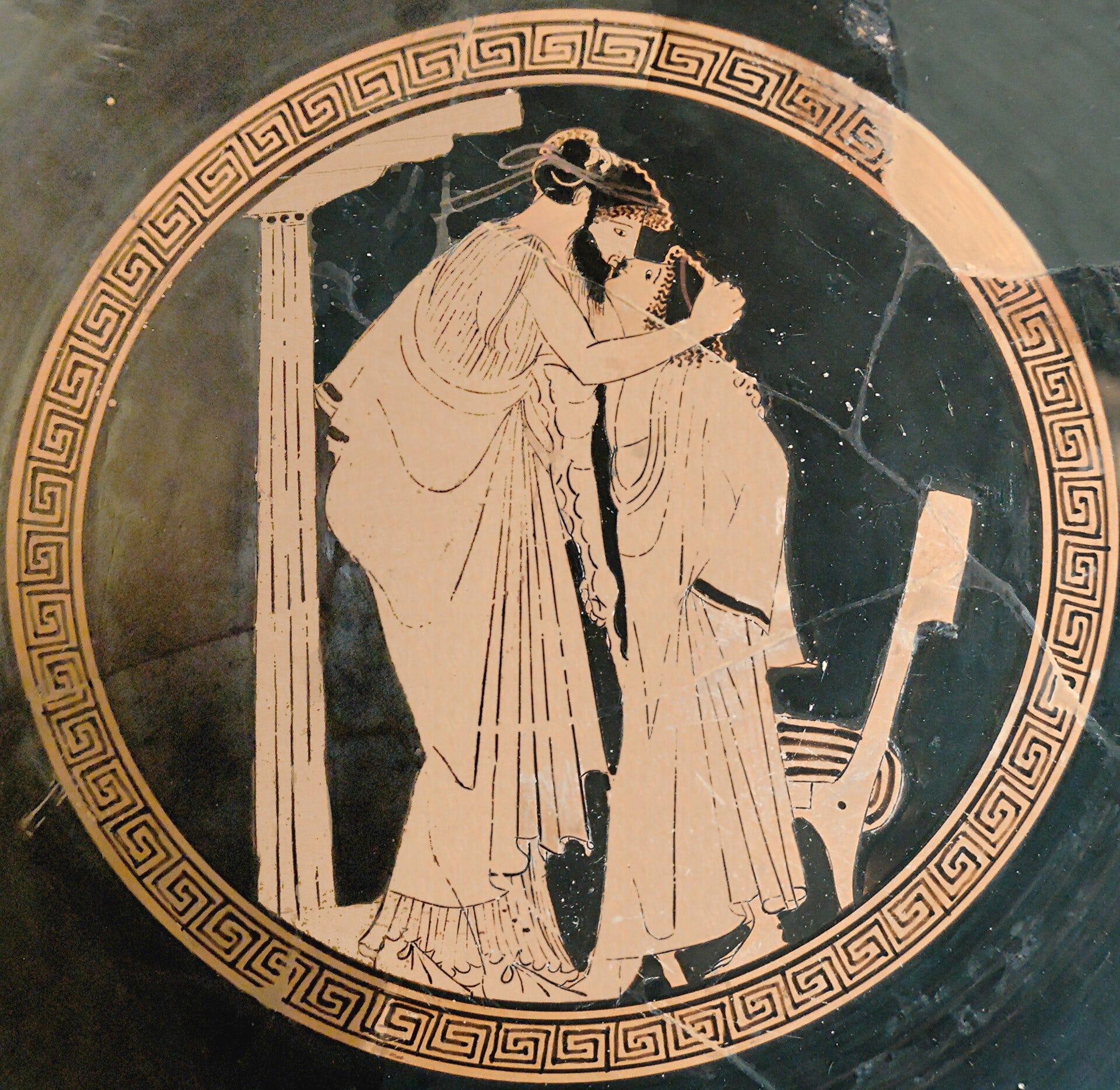
(Pictured above: Attic Greek pottery depicting pedophthoreseis.)
These practices were not simply abhorrent for Jews and early Christians in the first century; they were indicative of who truly ruled over them. A culture that condoned, celebrated, or profited from the abuse and destruction of its most innocent was corrupt, and it was clear what or who corrupted it. The Apostles recognized this imposter even in the figure of the Roman emperor, “a single man who claimed to rule the world… [and] also claimed to be a god.” (101) Clearly, this man “was the representative of that dark power on earth and wielded the Devil’s power and authority,” (101) which eventually manifested in the literal persecution and sacrifice of Christians. Indeed, all but one of the Apostles were martyred, and several were directly killed by the Empire. Thus, “Rome was the manifestation of the rule of Satan over their present evil age… [and] Christ, the Messiah who had conquered the Devil worshiped by Rome and taken his power, challenged Rome’s gospel just as much as it had challenged the Baal Cycle.” (102) Through the imperial cult and its repulsive practices and rituals, Rome had exposed the power that actually ruled the world. And he was the oldest and most familiar of foes.

(Pictured above: A picture from February 11th’s congressional hearing of Attorney General Pam Bondi.)
On February 11th, 2026, the Attorney General faced a congressional hearing over her agency’s, the Department of Justice, handling of the ‘Epstein Files.’ In one of many stunning moments, AG Pam Bondi defended her and her agency’s actions by insisting that Congress did not care when her predecessor Merrick Garland served the role. She doubled down on her statement by arguing that Congress only cared now because President Trump was in office, whose success was clear from the surge in the stock market. “The Dow is over $50,000!” she shrieked. “The S&P at [sic] almost $7,000 and the NASDAQ smashing records! Americans’ 401ks and retirement savings are booming. That’s what we should be talking about!” It was a particularly shocking and obtuse proclamation, considering that her DOJ knowingly revealed over 30 of Epstein’s rape and sex trafficking victims (some of whom were underage at the time) but redacted the overwhelming majority of Epstein’s co-conspirators. Yet it was a moment of transparency, revealing the true values of President Trump’s administration and the American political system at large.
Our country does not value human life. When the nation’s top representative for law and order deflects legitimate concerns about the systemic rape, trafficking, and exploitation of women and children by the country’s most powerful government officials and businessmen, it’s a titanic miscarriage of justice. But when she also asserts that Americans care more (and should) about their “401ks and retirement savings,” that is a confession. The government cares about money and power, not its most innocent. Although the Epstein Files have made this apparent, some of us suspected as much. As of 2020, 1 in 5 American pregnancies are aborted.11 Since 9/11, over 4.5 million people have died directly and indirectly as a result of U.S. military aggression. Almost a million were directly killed, and almost half of those were civilians.12 Meanwhile, the U.S. leads the world with the most billionaires - 902 as of April 2025 - with a net worth of $6.8 trillion.13 America’s priorities are obvious. We are a nation that values power, wealth, and military supremacy, at the cost of our most innocent. And any nation that makes such a trade makes its allegiances evident. It worships the Devil.
Therefore, we should not be surprised that our country is rotting. We have knowingly and unknowingly participated in the worship of evil, in whose image we have slowly been formed. Our culture has enslaved itself to the Lord of Death, and thus, it has become a hollow corpse. We feel this in the debasement of our art, the increasing worthlessness of our dollar, and the decay of our systems. Polarization, partisanship, addiction, disease, and a declining birth rate are just symptoms of the greater plague, much like the one that struck the Hebrews after their elders adopted the worship of Baal. When the human being, made in the image of God, convenes with the demonic, he invites defilement. We were made to reflect the glory of God, not the blight of sin and death.
Yet, let us take hope in the fact that God has dealt with such situations before, and will do so again. He conquered the Devil before, and He will do so finally at the end of days. The empires which have come under the ensnarement of the Devil’s worship have risen and fallen; some now mere relics of the former wealth and power they once enjoyed. God has scattered them across the annals of history, turning them into footnotes and artifacts. As difficult as it may be to comprehend, we should anticipate a similar future for the United States and refocus ourselves on what truly matters: salvation. As Fr. De Young emphasizes, “The cure for the deception of the Devil was the truth of the gospel of Christ.” (102)
In addition to the demonic discussions of pedophilia, sex trafficking, rituals involving eating human beings, torture, and murder, there are disturbing emails detailing other forms of depravity. These include discussions about utilizing the Federal Reserve as a financial weapon against unsuspecting Americans, funding transgenderism propaganda, and pushing it on children as young as 3. There is also an email that appears to be to Epstein, which reads: “Also - I’ve been thinking a lot about that question that you asked bill gates [sic] “how do we get rid of poor people as a whole” and I have an answer/ comment regarding that for you.” As a whole, these emails reveal a total lack of regard for human beings.
In 2016, during the presidential election, Julian Assange’s WikiLeaks unleashed the private emails of John Podesta, Hillary Clinton’s campaign chair and the former White House Chief of Staff (under Bill Clinton). The emails were explosive not only for revealing the nefarious and crooked practices within Hillary Clinton’s inner circle, but also for containing hundreds of odd emails pertaining to what were clearly code words: “pizza,” “hot dogs,” “cheese,” “pasta,” “ice cream,” etc. Not only has the FBI confirmed that these are code words in pedophile/sex trafficking criminal circles, but the terms appear during discussions about events and parties. For excellent reporting on the subject, I suggest:

Stephen De Young. The Baal Book: A Biography of the Devil. Ancient Faith Publishing, 2025.
Syncretism is a merging or fusion of different religious concepts, beliefs, rituals, or sometimes even deities.
For full context, read Ezekiel 28:11-14 - “Moreover, the word of the Lord came to me, saying, ‘Son of man, take up a lamentation for the king of Tyre, and say to him, ‘Thus says the Lord God: “You were the seal of perfection, full of wisdom and perfect in beauty. You were in Eden, the garden of God; every precious stone was your covering: the sardius, topaz, and diamond, beryl, onyx, and jasper, sapphire, turquoise, and emerald with gold. The workmanship of your timbrels and pipes was prepared for you on the day you were created. You were the anointed cherub who covers; I established you; you were on the holy mountain of God; you walked back and forth in the midst of fiery stones.’” (NKJV)
Ezekiel 28:18
Isaiah 14:3-21
Cf. Mattthew 12:24-27; Mark 3:22; and Luke 11:14-19
This was especially shocking for Jews because Greeks used pigs in specific mystery religions, such as the Eleusinian Mysteries. This cult was highly secret yet extremely popular, even among Roman emperors centuries later, and recreated the myth of Hades’ abduction of Persephone, the daughter of the agricultural goddess, Demeter. Piglets were ritualistically drowned as a part of the initiation process.
The Didache, Greek text with English translation, greekdoc.github.io, https://greekdoc.github.io/early/didache.html, chap. 2, verses 1-2. Accessed 13 Feb. 2026.
Carla K. Johnson, “U.S. Abortions Rose in 2020, with about 1 in 5 Pregnancies Terminated,” PBS NewsHour, 15 June 2022, www.pbs.org/newshour/nation/u-s-abortions-rose-in-2020-with-about-1-in-5-pregnancies-terminated.
Human. Costs of War Project, Watson Institute for International and Public Affairs, Brown U, n.d., costsofwar.watson.brown.edu/costs/human.
Sylvan Lebrun, “The Countries With The Most Billionaires 2025,” Forbes, 1 Apr. 2025, updated 15 July 2025, www.forbes.com/sites/sylvanlebrun/2025/04/01/the-countries-with-the-most-billionaires-2025/.
This was excellently written
Thank you for writing what was necessary. Godspeed.